CY

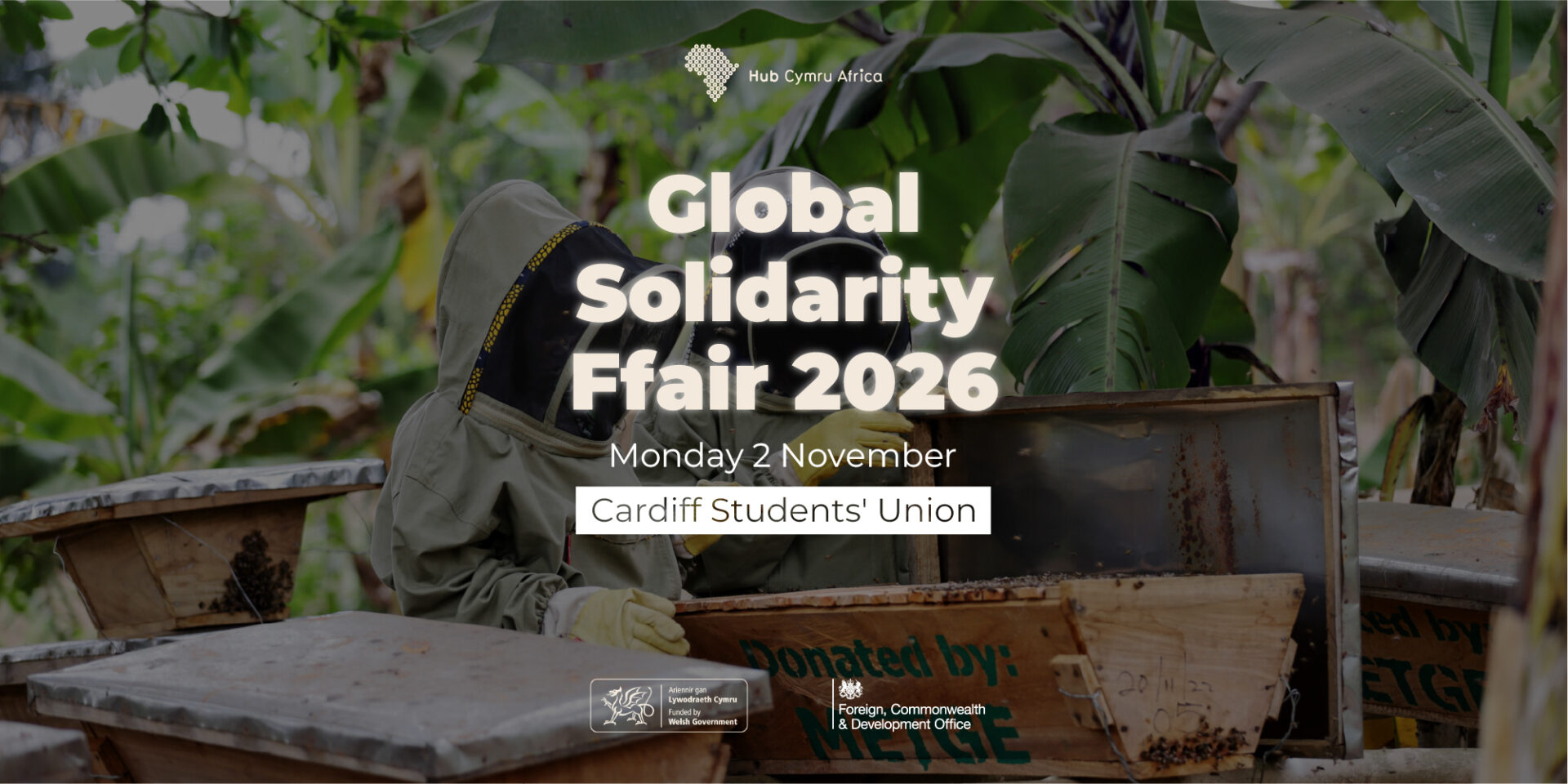
Global Solidarity Ffair 2026

Taking action in partnership

Conference In person event Cardiff Students' Union Park Place Cardiff WALES CF10 3QN Register

Wales’ flagship global solidarity event is back for 2026! This year, we’re swapping out our traditional conference for a Ffair and holding it at Cardiff Student’s Union!

This year, we’re looking to raise awareness and build support for global solidarity and international development with people who care about taking action on climate change, achieving social justice and making the world safer.

Our programme includes intros to the issues and work of our sector, more in-depth workshops for experienced iNGO workers, panel discussions, keynote speeches from leaders in global solidarity and a special exhibition to showcase organisations from the sector and offer a space to network and find opportunities to get experience in international development and global solidarity.

Hub Cymru Africa represents the global solidarity and international development sector in Wales and supports the sector to advance the UN Sustainable Development Goals and the Fair Trade Movement through partnership projects between Wales, Africa and beyond.

Hub Cymru Africa is a partnership bringing together the work of Global Health Partnerships Cymru, the Sub-Sahara Advisory Panel, Cymru Global and Fair Trade Wales.

Here’s a sneak peak of what to expect this November!

  • Achieving global climate justice
  • Dismantling the orphanage trap
  • The links between beekeeping and gender justice
  • Decolonising international development
  • Dyfodol undod byd-eang yng Nghymru
  • Building global partnerships between schools
  • Defending dissent in higher education

Programme

We have a packed programme of introductory and in-depth workshops and seminars covering a wide range of themes and subjects in global solidarity, International development and foreign aid. Alongside this, our exhibition space will host stalls from organisations, partnerships and charities working in the sector opportunities to get involved, whether through volunteering, campaigning or changing consumer choices.

The day will be split up into two plenary sessions with keynote speeches and lively performances broken up with four main sessions containing a wide variety of workshops and seminars.

While the day will allow attendees to drop in and out to any and all sessions they are interested in, the event will commence with an opportunity to connect with Hub Cymru Africa, meet colleagues and supporters of global solidarity and browse the Ffair stands showcasing organisations, partnerships and charities working in the sector.

Mpho Tutu van Furth is an Anglican priest, speaker, writer, theologian, artist, mother and youngest daughter of the world-famous South African archbishop and human rights activist Desmond Tutu. Mrs. Tutu van Furth studied electrical engineering in Washington, worked with refugees in New York and was founder and director of The Tutu Institute for Prayer and Pilgrimage and director of The Desmond & Leah Tutu legacy foundation that strives for peace and justice.

She married Dutch professor of pediatrics Marceline van Furth in 2015. After they married in the Netherlands, the South African church forced her to resign her priesthood for marrying a woman.

Mpho Tutu van Furth propagates the philosophy of Ubuntu that gives people insight into themselves and the connection with others. The word literally means ‘humanity’. Ubuntu assumes that someone is only someone through other people. In other words: we are only human in relation to other people. Our humanity is intertwined and every tear in the fabric of our connectedness must be repaired so that we can all become whole. It forms the basis of who we are.

Introductory session

30 minutes

Interested in family and community care models, healthy child development? Are you supporting an orphanage and want to hear more about the alternatives?

At least 5.4 million children are living in orphanages or residential institutions around the world right now. Many organisations and individuals support orphanages through volunteering or with well-intentioned donations, believing they are helping children to live in a safe environment and improve their lives. However, the evidence on the impact of orphanages on child development stretches back more than 120 years and crosses continents, political systems, and cultures. It points to the same conclusion, again and again: orphanages cause harm to children’s healthy development.
Over 80% of children in orphanages are estimated to have a living parent, and most have family, who may be able to care for them with support.

But there is good news! A global movement is underway to end the era of orphanages. But this isn’t simply about closing institutions, it’s about tackling the reasons children are separated from their families in the first place, and building the services and support that make families and communities safer, healthier and stronger. Many orphanages throughout the world have recognised this and have transitioned to put the children first and provide non-institutional services instead.

In this session, Mark Riley, from Hope and Homes for Children, will talk about his experience living and working in East Africa on what is known as ‘care reform’, that is helping countries move away from the orphanages systems to more healthy family and community care systems for children.

Mark will discuss:

  • Why orphanages as a development model are failing
  • Follow the money: how redirecting orphanage funding transforms whole systems
  • Care reform as a catalyst, not a niche
  • Case Studies in Kenya and Rwanda
  • Stories of transition
    Care leavers as the experts
  • Wales in the world: from donor to partner in care reform.

About Mark Riley

Mark Riley is a child protection and safeguarding specialist with over 20 years’ experience driving care reform and humanitarian protection initiatives across Africa and Asia, including 13 years living and working on the frontline in East Africa. His work spans alternative care, deinstitutionalisation, safeguarding investigations, and inter-agency coordination, with a track record of partnering with UNICEF, USAID, Caritas, and national governments to strengthen child protection systems at both policy and operational levels. Mark joined Hope and Homes for Children in 2016. In this role he provides global strategic and programmatic guidance across the organisation’s portfolio, leading care reform efforts in India and East Africa.

In-depth session

50 minutes

Cardiff University has been awarded Fairtrade status at level 1. In this workshop, find out what this means and taste some of the catering outlets’ delicious Fairtrade options.

You will be able to add your ideas on how Fairtrade can be integrated further into staff and student life at the university, in catering, campaigning and research, and explore ways you can personally get involved to promote Fairtrade further in the University and beyond.

The workshop will be run by the Chair of Fair Trade Wales, Dr Maryam Lofti. Maryam is also Senior Lecturer (Associate Professor) of Sustainable Supply Chain Management at Cardiff Business School. She will be joined by Annabel Hurst, Head of Catering, Conferences and Events at Cardiff University and Tristan Cairns, Ethical and Environmental Officer at Cardiff University Students’ Union.

Introductory session

30 minutes

We’ve all heard of humanitarian work but what is it really? This session will explore the sorts of situations to which humanitarian organisations respond. You will learn about what principles guide the work, how global organisations work with local partners and how people can get involved in the sector.

This session will be led by Hayley Morgan. Hayley spent nearly ten years working with Médecins Sans Frontières (Doctors Without Borders) in both conflict and post-conflict areas. She witnessed the impacts of conflict and upheaval, forced migration and incredible resilience from the people she met and lived alongside. Hayley led Cymru Global (formerly Welsh Centre for International Affairs) from 2024-26.

Introductory session

30 minutes

We should all have the opportunity to lead a healthy life but poverty, power and privilege have a huge effect on the health of individuals and populations across the world. The impacts of environmental degradation and infectious diseases make it clear that many health issues must be tackled internationally. Global health is an area for study, research and practice, with the aim of improving health and achieving equity in health for all people worldwide.

This session will be led by Israa Mohammed, Chair of Global Health Partnerships Cymru. Israa works as an Advanced Epidemiological Scientist at Public Health Wales, supporting infectious disease surveillance and outbreak investigations. With a background in pharmacy and public health, she brings over eight years of multidisciplinary experience in epidemiology, clinical pharmacy, and academia across Sudan and the UK. She holds a Bachelor of Pharmacy (Hons) from the University of Khartoum, an MSc in Clinical Pharmacy, and an MSc in Public Health for Development from the London School of Hygiene and Tropical Medicine.

In-depth session

50 minutes

This session will be repeated through the medium of Welsh at 4.10pm.

When the world feels divided and distrustful, it’s tempting to push harder, to debate, convince, or call out. Change doesn’t always begin with pressure; it can start with connection. The Imagine Action Toolkit is a set of 10 simple, practical tools to help you communicate with care, tell compelling stories, and inspire action in your community. They’re quick to learn and easy to use; whether you’re giving a presentation, running an event, writing a press release, or just having a conversation.

You don’t need any experience in communications or a background in climate work. Whether you’re a campaigner, educator, artist, faith leader, or simply an active member of your community, this training is for anyone who wants to talk about the things they care about with more confidence and impact.

Designed to help you communicate what matters with greater impact, and connect to a wider movement working toward the same goal: shaping a future for Wales that includes everyone.

This training will be led by Chloe Tuck, Storytelling Manager at Climate Cymru.

Introductory session

30 minutes

Would you like to get involved with the global solidarity sector in Wales, and gain valuable skills and experience in International Development or campaigning?

Come and hear from students and young people who have volunteered with Wales Africa partnerships, as well as from organisations who have hosted volunteers, to hear what they gained and their tips for getting the most out of the experience. Hub Cymru Africa will share details of our volunteering programme, and how you can get involved.

There will be an opportunity for questions to the panel, and to meet organisations who are interested in hosting a volunteer at the end of the session.

The event will be run by Cathie Jackson, Coordinator of the Hub Cymru Africa Volunteering Programme. She will be joined by past volunteers and host organisations.

Introductory session

30 minutes

‘We cannot keep peace when there is no peace to keep’ said UN Secretary-General António Guterres in August. Peace building is a crucial part of global solidarity. Without peace there can be no justice and no sustainable development. This session will explore the meaning of peace and consider the tools and techniques of peace building, looking at how we can all get involved. 

This session will be led by Jane Harries, Peace Education Manager at Cymru Global. Inspired by her Quaker beliefs, Jane has been active in work to promote peace and human rights for many years. In the 1980s she joined a group called ‘Women to Women for Peace’ which aimed to build bridges between people from countries with opposing political systems and ideologies.  Since 2004 she has been involved with individuals and organisations working for peace in Israel and Palestine. She has been with Cymru Global since 2015.

Introductory session

30 minutes

Colonialism has shaped all of our lives, leaving its mark on politics, economies and societies across the world. The international development sector works to address the colonial legacies of inequality, poverty and environmental degradation. Too often, though, international development groups have been unconsciously guided by colonial thinking and have replicated the problems of the past. This presentation will look at some of the problems in the development sector – both historically and now – and consider how we can all play a role in decolonising development.

This session will be led by Fadhili Maghiya. Fadhili is the Director of the Sub Sahara Advisory Panel (SSAP), a network of African communities in Wales working in international development and across Wales. Fadhili is also the Founder and Director of Watch-Africa Cymru: Wales’ African Film Festival. Having started the festival in 2013, it has grown to become one of the leading festivals in Wales focusing on African cinema. 

Introductory session

30 minutes

Come along to a demonstration of wheelchair rugby and try out the wheelchairs for yourself.

The session will use Fairtrade rugby balls from Bala Sport.

Drop in to the Wales 5s Wheelchair Rugby Union stand and the Bala Sport fairtrade balls stand at the Ffair throughout the day. Learn more about the Wheelchair Rugby Union’s link with Uganda at their session at 4.10pm.

Sioned Williams is the Deputy First Minister of Wales and Cabinet Minister for Social Justice and Equality in the Welsh Government. She has been in post since the 2026 Senedd election and is responsible for the Wales and Africa Programme.

Hear directly from Guarani Indigenous leaders from Brazil about their culture, struggle for land and forests, and hopes for future generations.
Their territories lie within the Atlantic Forest, a globally important ecosystem home to around 5% of the world’s biodiversity, but only 7% remains intact. Under pressure from land dispossession and industrial agriculture, including soy production, Guarani communities are reclaiming ancestral lands, restoring forests and defending their rights and culture. These pressures are connected to Wales, where imported soy is widely used as animal feed, particularly in poultry.
Working in partnership with Welsh charity Size of Wales, they will explore Indigenous leadership, global solidarity and what equitable international partnerships can look like.

Ju Kerexu (Juliana Kerexu Mirim Mariano) was born in the Ilha da Cotinga Indigenous Territory in Paranaguá and is the first female chief in the region. A leader of the Tekoa Takuaty community, she has served as Tenondé Coordinator of the Comissão Guarani Yvyrupa since 2022. A Guarani teacher, poet, spiritual leader, artisan and actress, she grounds her work in spirituality and ancestral knowledge, strengthening the collective path of her people. As a prominent female leader, Ju Kerexu brings women together through national gatherings, defends Guarani territory and the Atlantic Forest and Pampa biomes, and works to ensure that future generations can grow up speaking the Guarani language and connected to their spirituality, culture and struggle for life and land. Guided by the teachings of the nhaneramõi (Guarani elders), she works to revitalise ancestral practices while confronting contemporary challenges. Her leadership continues to inspire not only her own community, but networks of Indigenous women and allies across Brazil and beyond.

Vilma Verá Rios was born in the Pirajuí Village, a demarcated Indigenous territory in Paranhos (MS), where she spent her childhood and early adolescence under the constant vigilance of her parents to protect her from gender-based violence. At 16, she moved with her family to the Guasu Guavirá Indigenous Land, in Yvy Okaju Village, Guaíra, Paraná, where she began to face the challenges of a territory in dispute. At 17, she made her first public statement on the realities of Indigenous youth and women, marking the emergence of a committed Avá-Guarani activist. Known internationally for her firm advocacy, Vilma works across national and international spaces to denounce violations against her people, focusing on agribusiness expansion, pesticides, racism, and gender-based violence, while promoting Indigenous women’s representation and leadership. She is currently a teacher of her mother tongue and a regional coordinator of the Comissão Guarani Yvyrupa.

Panel discussion

50 minutes

This discussion will take place in the Welsh language, but simultaneous translation will be available for non-Welsh speakers. 

What is the future of global solidarity in an increasingly polarised Wales? From campaigns against slavery to the Fair Trade Nation, the people of Wales have long taken action to make the world a better place. In recent years, action on climate change and support for people in low and middle income countries have been under attack in online spaces, on the streets and in the Senedd. 

Our panellists will consider how we can unite Wales in solidarity with the world and build a refreshed movement to respond to the challenges of the next few years.

  • Elen Jones, co-founder & director at Jenipher’s Coffi, former head of Fair Trade Wales
  • Mari Tutesigensi, head of Christian Aid Wales 
  • Yasmin Begum, campaigner, researcher and writer
  • Joseff Gnagbo (TBC), Ivorian–born Welsh activist, teacher, linguist and musician, former president of Cymdeithas yr Iaith Cymraeg. 
  • Chaired by Noam Devey 

In-depth session

50 minutes

This interactive workshop is for Wales and Africa partnerships who are working in schools, and people who are interested in getting involved and learning more. The purpose of the workshop is to give an opportunity to share learning and best practice, and to connect with others with a view to forming a network to continue sharing experience.

The workshop will be led by Amber Demetrius, Head of Global Learning at Cymru Global, and will focus on discussion of key questions:

  • How do I start the relationship with a school, and how do I make it effective?
  • What type of work can I do (what works best?)
  • How do I integrate with curriculum targets?
  • Partnering with schools in African countries- what are the challenges, and opportunities?
  • Where can I share my resources, and find others?
  • Are there existing programmes/links/networks that I could join up with?

The outcome will be a curated resource from the discussions, and if there is interest, establishment of a network of interested practitioners to continue to share experience and learning.

In-depth session

50 minutes

The workshop will explore how systems of racial separation, land control, displacement, movement restrictions and political domination operated under apartheid South Africa and how Human Rights groups identify comparable structures in Israel/Palestine.

The workshop will ask participants to identify patterns for themselves and consider what lessons the South African experience offers for understanding contemporary Palestine. The role of BDS (Boycott, Divestment Sanctions) for promoting peace and what we should do build international solidarity.

This session will be led by Zahid Noor, Interim Convenor, PSC Cymru (Palestine Solidarity Campaign).

You may also be interested in visiting the Tŷ Filasteen’s stand in the Ffair. Based in The Mumbles near Swansea, Tŷ Filasteen has become a place where Palestinian culture, history, and creativity are encountered through the work of Palestinian artisans, writers, farmers, artists, and makers. More than a shop, it is a cultural space that seeks to build lasting relationships between Wales and Palestine through heritage, education, and community. Take some time out from the busy programme of the Ffair to try your hand at tatreez.


Introductory session

30 minutes

This interactive session will introduce you to global climate justice and its main themes and issues. Do we all experience climate injustice in the same way? What role does our history have in our responsibilities today? Who is advocating for those not born yet but will have to live with the effects of our actions?

Global Climate Justice Cymru (GCJC) is a coalition of organisations, grassroots groups and individuals working collectively to put climate justice and equity at the heart of climate action, in Wales, the UK, and globally.

The session will be led by Michaela Rohmann, Volunteering Coordinator with Cymru Global.

Introductory session

30 minutes

This session will explore the role Wales can play as a Nation of Sanctuary for LGBTQ+ migrants at risk of persecution, highlighting the importance of global solidarity and sharing perspectives on protection, inclusion, and belonging.

In-depth session

50 minutes

The G20 brings together 19 of the world’s largest economies and two major multilateral bodies – the European Union and the African Union. This group makes up 85% of global GDP, 75% of international trade, and two-thirds of the world’s population.

As President of the G20 in 2027, the UK will be in a position to influence the debate and press for agreement to achieve debt relief, action on climate change and a global economy that works for all.

In this session Gideon Rabinowitz, Director of Policy and Advocacy at Bond, will talk about the importance of the UK’s presidency of the G20, the policy changes needed to make a difference and how groups and people in Wales can join the campaign for the UK Government to take action. 

Gideon has worked across the UK international development sector in a range of policy, advocacy and research roles, focusing on trade, UK aid and development financing, and social and economic development issues. He has held various senior roles including at Oxfam GB, the ODI and Agulhas Applied Knowledge. He has also held positions at the UK Aid Network and CUTS International. 

Introductory session

30 minutes

What do we mean by gender justice? What experiences illustrate the importance of considering gender in international development?

Or  “What does Gender have to do with Beekeeping?”

This is an opportunity to get to grips with gender and development, ask questions of expert speakers, and to hear about the Hub Cymru Africa’s popular Gender Community of Practice – a space to share experiences, expertise and grow together.

Introductory session

50 minutes

This interactive session with Amnesty International will introduce you to the basics of student organising – from finding your people and building a movement to taking action that brings about real change. Come along, meet other activists, and explore how you can make change happen on your campus.

Hannah Stokes is Senior Community Organiser – Youth & Students at Amnesty International UK.

Introductory session

30 minutes

Join Paul Lindoewood from #SOS and Justin Griffiths from Wales 5s Wheelchair Rugby Union for an inspiring conversation about disability-inclusive development and international solidarity. Justin will share insights from his recent trip to Uganda, exploring how sport, partnership and inclusion can challenge perceptions, break down barriers and create opportunities for people with disabilities both in Wales and Africa.

Visit #SOS and the Wheelchair Rugby Union at their stands in the Ffair or try out wheelchair rugby for yourself at 1.10pm in The Lodge.

Panel discussion

50 minutes

What is the role of Global Health Partnerships as aid budgets are cut? Is a partnership model with clearer mutual benefits and bi-directional learning a more attractive model for rich country governments as resources become scarce? How can we in Wales repay the huge investment in skills and training that is represented in the diaspora health workers who keep our NHS functioning? What is the role for health practitioners from Wales and what sort of support do we need from the Welsh Government?

This panel discussion will explore these questions and more.

Panelists include: 

  • Israa Mohammed, Chair of Global Health Partnerships Cymru
  • Ben Simms, Chief Executive, Global Health Partnerships (UK)
  • Jane Hutt, Vale for Africa, former Senedd Member and Welsh Government minister 
  • Safa Elhassan MS (TBC), consultant ophthalmologist, Senedd Member for Gŵyr Abertawe

In-depth session

50 minutes

This session will be in Welsh.  A session in English takes place at 12.10pm.

When the world feels divided and distrustful, it’s tempting to push harder, to debate, convince, or call out. Change doesn’t always begin with pressure; it can start with connection. The Imagine Action Toolkit is a set of 10 simple, practical tools to help you communicate with care, tell compelling stories, and inspire action in your community. They’re quick to learn and easy to use; whether you’re giving a presentation, running an event, writing a press release, or just having a conversation.

You don’t need any experience in communications or a background in climate work. Whether you’re a campaigner, educator, artist, faith leader, or simply an active member of your community, this training is for anyone who wants to talk about the things they care about with more confidence and impact.

Designed to help you communicate what matters with greater impact, and connect to a wider movement working toward the same goal: shaping a future for Wales that includes everyone.

This training will be led by Chloe Tuck, Storytelling Manager at Climate Cymru.

Register for free below!